
Where we started…

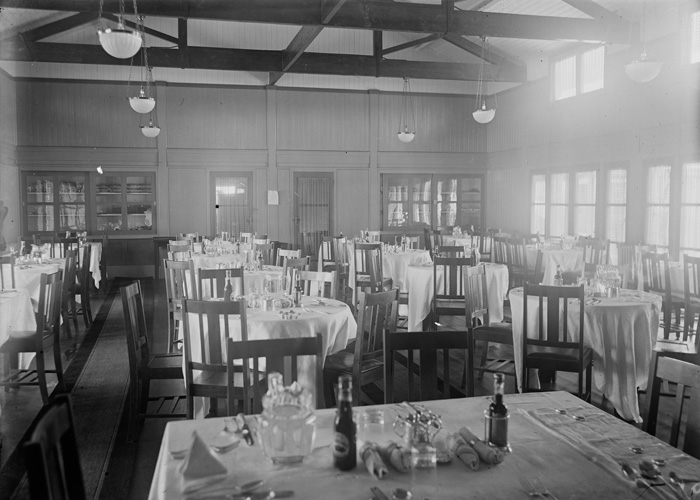
Located on Ngunnawal Country, Gorman House was built in 1924 as a hostel for Commonwealth Public Servants. As the place of first contact for so many Canberrans, Gorman House featured strongly in the social history of Canberra, particularly during the city’s early development as the Federal Capital of Australia. Thousands of people lived at Gorman House during its 48 years as a hostel. Ex-residents remember it warmly for its atmosphere of camaraderie and for its simple but graceful design.

Now a lively and centrally located Arts Centre, Gorman House is important in a new way to the Canberra community.

Explore our dedicated galleries and recollections from each era of our building’s history below, or read our short history by writer Stephanie Greene.

A Short History

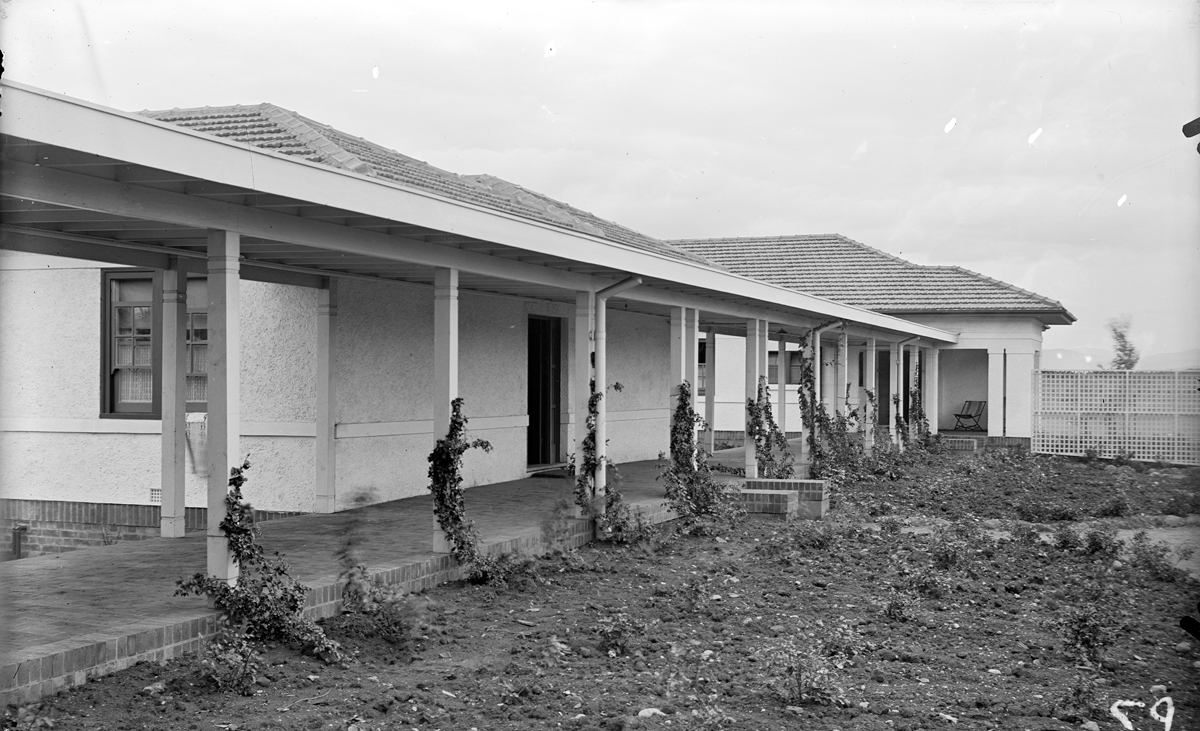
Wisteria vines growing on the terrace at Hotel Ainslie (Gorman House)

1924 – 1945

Commonwealth Hostel

Gorman House was built in 1924 as a hostel for Commonwealth Public Servants in the fledgling national capital Canberra. For many young people who came to work in Canberra in the 1920’s, 30’s and 40’s, Commonwealth Government Hostels were central to life in Canberra.

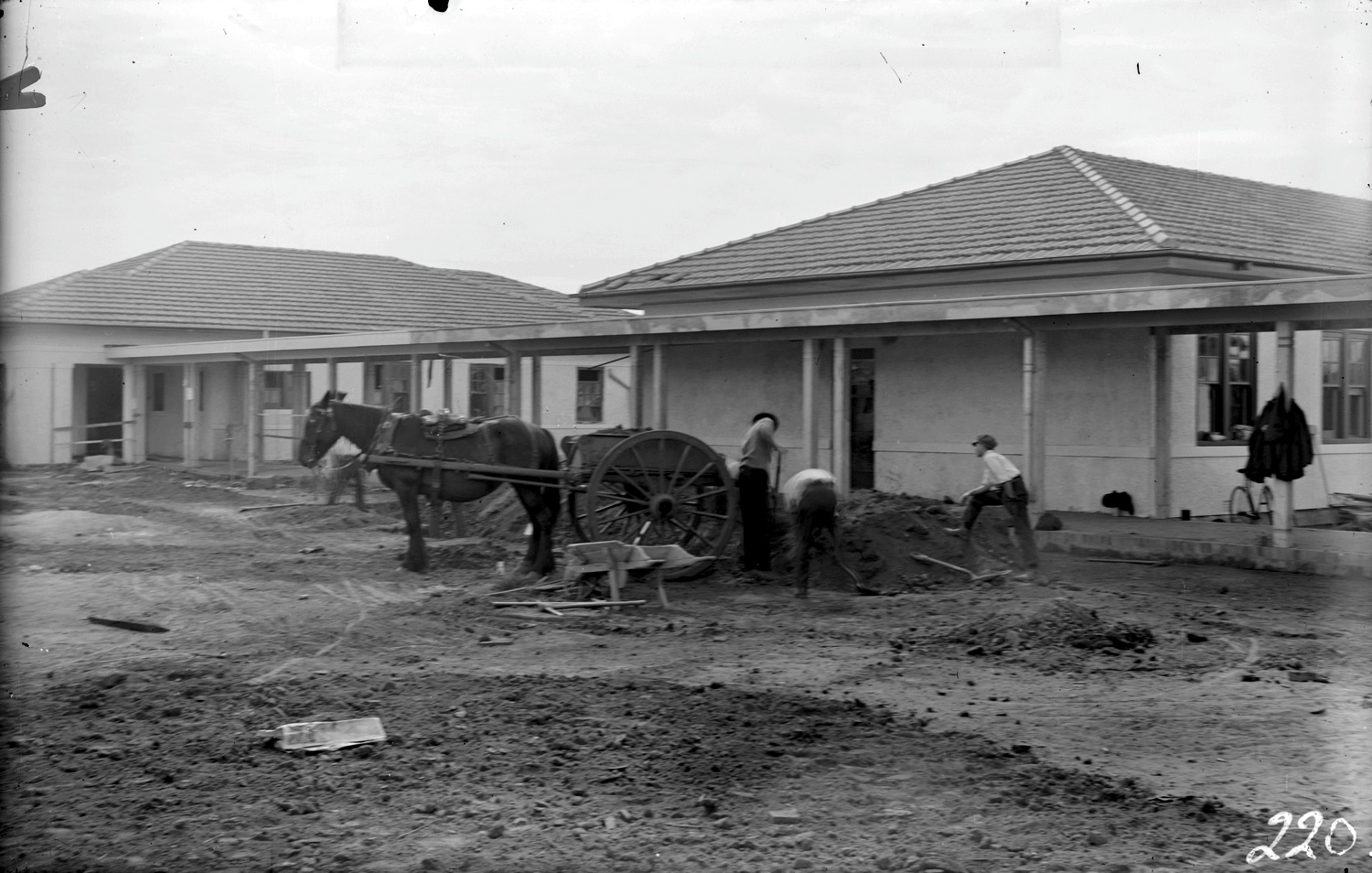
Gorman House was first known as “Hostel No. 3”, which was designed and approved by Parliament in 1923 as a hostel for lower paid Public Servants, ostensively female clerks and typists. Construction began in 1924 with the first residents moving in by 1925, and it became known as the “Hotel Ainslie”.

By 1927, the building received a new name, Gorman House, after the late Clarence Gorman and has kept that mantel to the present day.

EXPLORE

Image: Mildenhall, 1924

An old black and white photograph of men and women lounging on the lawns of Gorman House

1945 – 1979

Post War

World War II brought change to Canberra, as it did to the world. For those at Gorman it entailed curfews, blackouts and the arrival of international visitors and migrants fleeing the war in Europe.

Men returned to Gorman House and social lives flourished with post-war optimism, with many relationships beginning in the hostel. Hostel life at Gorman House continued throughout the 60’s and 70’s with the addition of married quarters for couples up until the hostel closure in 1972.

In the mid – late 1970’s Gorman House accommodated Government Offices and for a brief period become the Commonwealth Police Training Academy until its relocation in 1979.

EXPLORE

Image: Private collection, circa 1943

Black adn white image of two ladies performing circus tricks in front of a sign that reads

1981 – 2009

Welcoming the Arts

In 1980 several arts and community organisations were on the look-out for a new space to operate as their then home, Reid House, was scheduled for demolition. A lobby group was formed and successfully pressed the Commonwealth Government for the use of Gorman House as their new home for the arts.

After some renovation works, Mrs. Tammie Fraser officially reopened Gorman House as a Community Arts Centre in 1981.

By the late 1980’s Gorman House had become a bubbling crucible of artistic and community talent, mainstream and experimental, open the public with the famous Gorman House Markets, with emerging artists selling their works, second hand clothing stalls and musicians and performers taking over the courtyard stage.

EXPLORE

Image: Gorman House Open Day, 1983

2009 – Present

Ainslie+Gorman

In 2009 Gorman House Arts Centre acquired management of the historic Ainslie Infants School, 300 metres north of Gorman House. Previously used as the Questacon’s first home in the 1980’s, it then housed numerous education and community organisations. The ACT Government awarded management of Ainslie to Gorman House and it has since become the creative community of Ainslie+Gorman.

Gorman dedicates itself to multi-disciplinary excellence, with artist studios, performance and rehearsal spaces while Ainslie is a dedicated music hub and co-working space.

In 2024 Gorman began phase one of its Centenary Upgrade Project, a restoration and renovation project focussed on modernising Gorman House to a fit-for-purpose community arts facility with its completion due in late 2026.

EXPLORE

Image: Rebecca Worth, 2023

Submit your stories

If you have a digital submission for the our archive please use the submit button below to upload your files.

For more information about the project or information on how to submit physical objects, artworks, documents and photos please contact marketing@ainslieandgorman.com.au or get in touch via our main office 02 6182 0000

Photo: Emma White, with permission from the National Library of Australia

Submit
